We were asked to do a blog in October. Honestly, I did not really understand what would be involved. However, I am a huge fan of video-essayists on Youtube, so I thought this would be my chance to put out some of the thought-provoking critiques that I enjoy reading others write. Video essay is a format of Youtube video in which deals with erudite subjects in a more relatable and digestible manner. For instance, they will talk about something complex like meta-narratives in post-modern literature, but they will do it by looking at Deadpool. This is what I hoped to do. Of course this blog is a college assignment, but also I felt it is almost important to realise that it is available to anyone to read. So, why not do some good, and make it enjoyable to read while also helping people without the privilege of a top-tier education to understand something they might not otherwise. After reading over the blog I think it reflects my mindset throughout the year quite clearly. The way I came up with topics for the blog was very much what you would expect from knowing me for a little while, which is to say; completely erratic. I would hear a lecturer mention an idea while daydreaming about some movie or song, et voila! A blog post.
I began my posts with a discussion of my fleeting view of academia, and how unfair the division of funding seemed to me. It was something that only became clear to me when we went from classes of three hundred to less than a dozen students in a room. The teachers we able to speak a little more honestly about the situation they were in as academics. While some were more vocal than others, they (however inadvertently) humanised themselves.
"It has become clear that there is no money
offered to some things, for instance
projectors, for the arts while more
pecuninarily profitable fields like medicine
and science have whole new multi-million
Euro buildings."
This was something that had annoyed me during my undergrad degree, but I did not know the extent to which the roots of the inequality spread. Once I heard about this problem it prompted me to think about whether this was an issue more generally or just within colleges. This led me to look for statistics on reading levels. I knew that books become less and less popular with the rise of instant entertainment online, but I wanted to know how bad it was and whether it varied from country to country. I also thought it would be a good idea to contrast these numbers with how much the average person in these countries watches television or is on a computer.
"According to The Guardian


“Men are more likely than women to avoid

picking up a book, with 11% of men and 5%

 of women surveyed saying they never read

for pleasure. A quarter of the UK’s adult

population – more than 12 million people – had

 picked up a book to read for enjoyment less

 than twice in the past six months.”

While another survey of British households
 by communications regulator Ofcom said UK
adults spend an average of eight hours and
forty-one minutes a day on media devices"
Reading for enjoyment is one thing, but I really doubt more than a handful of people read academic journals or Cambridge companions for fun. I recently heard a statistic that, if I knew it at the time, would certainly have made it into my post.
Towards the end of the post, I started to spiral a little, which often happens when I write without a real concrete goal. I went on to think about, even with the disparity between the sciences and the humanities, did another outside of the collegiate echo chamber care at all? In fact, I still wonder that. I started to contrast pop culture supernovas like ‘Flappy Bird’ and the Kardashians with more scientific innovations on the basis of their monetary value and their cultural relevance.
Even incredible scientific breakthroughs don’t
seem to be highly valued in comparison to inane
 pop culture. For instance, the Voyager
spacecraft left the solar system recently,
 marking a new epoch in human exploration
beyond the solar system. This went largely
unobserved. Meanwhile, Kim Kardashian has
81.5 million Instagram followers.
I ended my first post rather bleakly with a T.S Eliot quote, which in hindsight may have been a little overly dramatic. However, in a Trump world, with funding for the arts being completely cut from the US budget and far-right, anti-art parties on the rise everywhere, this might be a more impactful as relevant as time goes on – although I wish that weren’t the case.
My next post was something I felt needed to be articulated for years now; which is to say, a justification of hipster subculture. Along with millennials more generally,
hipsters have been a source of rebuke and mockery in conservative news outlets for years. What I found odd about these critiques is the sense that the writer did not really understand the ideas behind it and simply thought it was a bunch of rich kids in Brooklyn buying over-priced kale sandwiches and listening to Solipsynthm (yes, that is a real genre). Instead, I found it be a group of people deeply invested in improving their own era with focuses on anti-capitalist farmers markets and cottage industries facilitated with an unparalleled understanding of social media and the internet more generally. The first issue I wanted to address was ‘If they don’t look the same, how do I know what a hipster is?’ This question arises largely due to the ever changing nature of the sub-culture. Where other sub-cultures are highly distinguishable, the hipster does their best to defy clear categorisation. This refusal to be easily pigeon holed has lead the majority of people, even those who may have belonged to sub-cultures in the past, to see them as inauthentic and lacking any real substance as a group.
"An issue with this craze is
that it isn’t as obviously defined as say,
punk or hippie. These earlier popular trends
 had obvious trademarks which set them apart
 as being a distinct counter-culture, such as
 spiked hair and unruly beards. Hipster sub
-culture has always been intrinsically linked
 to ‘the new’, whether that be a pseudo-ironic
 rehash of 1940’s culture or the newest Apple
 watch. If anything, the changeable nature of
 their very identity is the part which they so
 commonly denounced."
After my preliminary description of the group, I felt it might be a good idea to compare their appropriation of various subcultural signifiers to the use of other sources in art forms. As I mentioned earlier in this portfolio, I’ve always liked the idea of showing complex ideas through the discussion of more relevant and relatable topics, and I saw the perfect opportunity here. It seems to me that there is a good comparison to be made between the hipster’s collagic use of cultural symbols to collage more generally and artistic fragmentation. I also felt that by connecting what is currently being ridiculed and lambasted to something generally praised for its innovation, I could give it some cultural authority by osmosis.
The reason I bring this up is that the whole
 phenomenon reminds me of the collages of
modern art and the Poundian idea of ‘making
it new’. If we look at some of the canonical
 works of the early 20th century like Eliot’s
 ‘Waste Land’ or Pounds ‘Cantos’ we can see
 a literary collage from history along with
 both high and low culture. This collection
 of fragments is what makes their work unique.
 We would also never call something like
‘The Waste Land‘ (Eliot) or Pablo Picasso’s
 ‘Bottle of Vieux Marc, Glass, Guitar and
 Newspaper’, (Picasso, 1913), unoriginal
The remainder of the blog post discusses the idea that change is natural in culture and to critique a group because they embrace change seemed odd to me. In hindsight I feel as though perhaps some of the performative gestures of the hipster are more pro-modern than modern, which is to say closer to empty pastiche then to any meaningful parody. While that does perhaps diminish their value as gestures, it does not make them totally devoid of meaning because perhaps pastiche and collage is all that is left once everything has already been said, and anything that has not been said is too daft to bother with.
The next blog post was a good deal more conventional than the two prior. It certaintly was not inspired by any genius on my part. I nipped into a charity shop in the city before heading on a round trip to various relatives on the run up to Christmas, and picked up a fairly innocuous book, aptly named The Art of Travel. I feel as though it wouldn’t have affected me as deeply if I were not traveling while I read it. Nonetheless I really did enjoy it and felt I needed to give my own opinion on the subject. I also felt that it would link nicely with Nietzsche whom I had just been introduced to in class a few weeks prior. Another thing I was questioning at the time, was what exactly was the point of literature or the arts more generally? In the book, de Botton talks about a few holidays he went on and what writers/thinkers helped him to enjoy them more. This understanding through the proxy of an author fascinated me, and seemed like a legitimate use of literature in a digital age.
 Monsieur de Botton has done a great deal for me
to understand how it can help humanity in its own
way... When we read Van Gogh’s letters
 from Provence or Orwell’s account of Parisian poverty
 we are given perspectives of places we may never
have been. What a really great novel allows us is
 the perspective of the world to the extent we feel
 as though we know it.
I felt as though an author could show you everything to be seen in a place in the few hours it takes to finish a short book, even if you could never afford the holiday. Equally a writer can give you the experience of a dangerous or at least uncomfortable adventure through a landscape without having to worry about the danger. The example I use here is Orwell’s Down and Out in Paris and London because it gives you a tour of parts of France and England which may no longer exist and I would certainly not like to visit in real life but love reading about someone visiting.
We can be shielded from the harshness of
traveland yet still experience it.
After this, I felt it would be a good idea to provide a counter-point to everything I had been saying. Even in a short piece, I think it is a good idea to give a thesis and antithesis to allow anyone reading it to create their own synthesis. In the case of this particular blog post I felt that there is a danger of over preparing for a holiday with reading, that you could have so much foreknowledge, potentially of things which might not even still be there, that it would ruin the experience for you entirely. I used Nietzsche’s idea of being excessively historical for this. This is something I still very much agree with, although I am going to be travelling to Scotland this winter so some Lanark and Robert Burns might not hurt, while Irvine Welsh may completely put me off the experience.
The next blog post is on the weaponisation of nostalgia and intertextual ‘in jokes’ in modern film. It is actually something near and dear to me, and something I feel could be expanded into a full-length paper at some stage. In the past few years with the new tidal wave of reboots, remake and sequels a decade after the original, we have seen nostalgia being used to great effect as a marketing ploy. This is true outside of cinema too. ‘Pokemon Go’, one of the most downloaded apps ever, relied almost entirely on the nostalgia of its player base for their success. What I feel needs discussing is now this sense of nostalgia is being commodified and used to sell media, without the media having any of the merits of the original. These bursts of nostalgia create a false sense of inner knowledge in which a character will say something, or an object will be seen which hankers back to an earlier text in the franchise. For this post I felt Disney was who I would focus on, particularly the new Star Wars movie, which is unforgivably guilty of the aforementioned sins.
The most recent films have been different,
 however. In the 7th film, Star Wars: The
 Force Awakens, there was a certain moment
as Rey and Finn are trying to find a ship
to escape Jakku when we get a glimpse of
 the Millenium Falcon. That moment links it
 more to the original movies than anything
else until then. There are several more
‘throw back’ moments throughout the film
which are all clinically created to give
the viewers a shot of nostalgic, keytar
playing, sleeveless denim jacket wearing,
 endorphins.
My final self-propelled blog post was on Bob Dylan’s Nobel prize win. While he did not win the prize for any specific song or idea, I felt it best to give special attention to one in particular. While the song I chose is certainly not my favourite Dylan song (that honour goes to The Time’s They are A-Changin’), it did fit into the literary framework I picked best. The song I chose was All around the Watchtower. This is easily one of his most influential, sprouting covers by Jimi Hendrix and U2, but it also contained some of the most poetic and cryptic lyrics of any of his works. As with my other blog posts, I took this as a chance to compound academic and pop-cultural ideas. In this case, I compared Ezra Pound’s Imagiste manifesto and the lyrics to Dylan’s song. I found that due to its aggressively succinct twelve line shape, All around the Watchtower fits rather will into the format outlined by Pound.
“Use no
superfluous word, no adjective, which
does not reveal something.”. Obviously given
that it is a song it couldn’t stick to the
spartan shortness which Pound himself gave
an example of in “In the station of the
metro”.The song does however, remain concise
despite it’s length in its incredible
complexity in only a couple of minutes and at
 only 12 lines I think even Pound would
approve.
I feel as though perhaps I could have given a proper example of an Imagiste poem here to contrast better with the song. This would have allowed for better points of comparison I think. Nonetheless I am quite happy with this post as it was both timely and served the general purpose of this blog reasonable well.
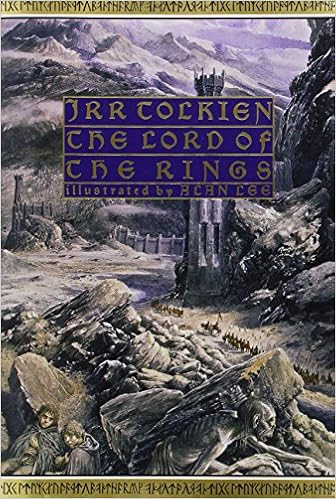
The next post I put up was on the ‘Edit-a-thon’. Before I heard we were doing it I had a misconception that Wikipedia was essentially an uncurated wasteland of bad referencing and ill informed opinions passing as fact. Clearly I was mistaken. In the post I talk about how I ended up writing about Pound (who you may have noticed is a favourite of mine). I wanted to write about Tolkien, but had forgotten that the only people more inscrutable and meticulous than academics are passionate nerds.
Not only was the Wikipedia page incredibly
 detailed and immaculately kept, but
there is an entire separate wiki dedicated
to his works. Considering the cult following
his books have I should have known the
Wikipedia pages would be bulletproof.
I went through Pound’s Wikipedia page with a fine toothed comb and found something that interested me and which had been seemingly ignored. Fortunately, it fell within the realms of things I know rather a lot about. On the day, the college’s dire WiFi did it’s best to prevent everyone from finishing their work but we all managed to get through it. I’m quite happy with the post although it was on an assigned topic and so I could not put the same set of ideas into it as I had with my other posts. None the less I found the experience useful and writing up on it was all part and parcel of the experience.
The conference was something that stressed me out more than anything I have done all year. Even thinking about it now puts me on edge. The fact we had to use the Pecha Kucha format was what really put me over, I think. I found it pretty easy making up the slides, writing what I wanted to say and saying it. What I could not do was get the timing right. No matter how much I practiced I always with ran into another slide or left dead air (I haven’t decided which is worse yet as both are agonising). I’m really happy with the post I put up for it, not to toot my own horn but I think it’s quite well phrased in some places. I do have to say that this blog post came a little while after a meeting with Prof Jenkins where she helped explain where my pitfalls have been in terms of my writing. This quote in particular, I like:
Once the actual day came around I had reached
a sort of existential calm, as if I was
riding in the eye of the anxiety storm which
had been raging for the whole week leading up
to it.
I feel it makes the most sense the group the two research seminars in together as a single point of discussion. While the subjects varied wildly attending them represented something wholly homogenous. The purpose of us attending the seminars, other than to learn something new, is to see the value of inter-disciplinary discourse. In each, we can see the ideas which the PhD candidates, professors and visiting academics are developing. I found them really useful to see the creative process of the lecturers. In each of my blog posts, I spoke a good deal on the topics of the seminars. However, it might have been a better idea to develop what I learned from them in terms of developing my own academic viewpoint rather than the literal knowledge I took in.
The ideas I carried through the creative parts of my blog are something I would like to continue in my writing in future. I still question the value of dusty tomes of secondary criticism sat on exclusionary library shelves, and so think that the internet is the best place to publish my ideas. I have been lucky enough to receive an exceptionally good education and I would like to use that privilege to explain interesting, useful and often highly complex ideas through comparison and metaphor as I have done here. There were several blog posts which I developed but never felt comfortable publishing. This may have been due to my worry that they were being graded. In the coming months, with the portfolio behind me, I am going to try to release them once I have finished editing and refining them. The blog has been a great place to hammer out ideas and I hope to continue using it for my particular agenda in mind.
Work cited
Pyke-Terrett, Luke. “In defense of hipsters and ‘making it new’.” Web log post. phoenician sailor blog, WordPress, 16 Sept. 2016. Web. 29 October.
Pyke-Terrett, Luke. “Do people still value academia within the humanitaries?.” Web log post. phoenician sailor blog, WordPress, 16 Sept. 2016. Web. 28 November.
Pyke-Terrett, Luke. “Alain de Botton and the authorial travel companion.” Web log post. phoenician sailor blog, WordPress, 16 Sept. 2017. Web. 17 January.
Pyke-Terrett, Luke. “All around the watchtower; a musical imagiste masterpiece.” Web log post. phoenician sailor blog, WordPress, 16 Sept. 2017. Web. 18 February .
Pyke-Terrett, Luke. “Wikipedia Editathon.” Web log post. phoenician sailor blog, WordPress, 16 Sept. 2017. Web. 3 .March.
Pyke-Terrett, Luke. “Reflections on Textualities Conference 2017” Web log post. phoenician sailor blog, WordPress, 16 Sept. 2017. Web. 17 .March.
Pyke-Terrett, Luke. “Research seminar – Virgil, Marlowe and Medieval Dido” Web log post. phoenician sailor blog, WordPress, 16 Sept. 2017. Web. 29 .March.
Pyke-Terrett, Luke. “Seminar; Kubrick, George, and the question of adaptation.” Web log post. phoenician sailor blog, WordPress, 16 Sept. 2017. Web. 29 .March.
Pyke-Terrett, Luke. “Literature and IT review.” Web log post. phoenician sailor blog, WordPress, 16 Sept. 2017. Web. 29 .March.